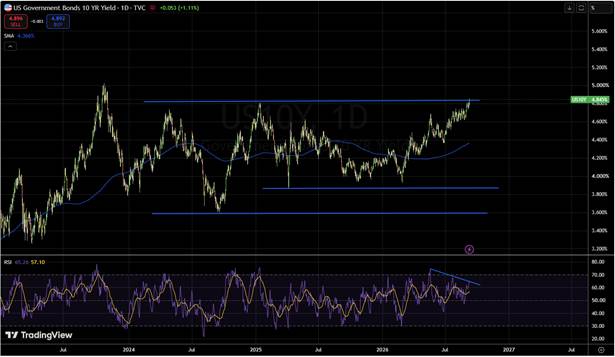
This morning (Pacific Time), I woke up to news that Treasury Secretary Scott Bessent expanded the Treasury buyback from 2 billion dollars to 6 billion dollars. The whole point is to make the longer-maturity treasury bonds more liquid. By reducing the amount of off-the run (older) treasury bonds off the hands of investors, it should in theory make the treasury market more liquid, which should lower interest rates. Also, most people, including me, think the treasury secretary is doing this to try to lower interest rates (my opinion, not a proven fact).
But why would the Treasury care about trying to make the longer term (10 year to 30-year treasury bonds) Treasury Bonds more liquid?
Mortgages move with the 10 to 30-year treasury yields. The higher those yields, the higher the mortgage interest rates. This is one mechanism of where the financial economy (stocks, bonds, etc.) can affect the real economy. In a simplistic model, higher treasury interest rates would make the mortgage interest rates higher. Higher mortgage rates would lead to lower housing investment and housing spending. Think less spending at Home Depot.
A lot of business loans, especially those with maturities of more than 10 years, are priced off the 10-year yield. Higher treasury yields might slow business investment.
Most corporate bonds, especially the longer-term corporate bonds, are priced off the 10-year treasury yield. In the past few months, a lot of larger technology companies have been issuing bonds to fund their AI investments more. Just like for business loans, higher treasury yields make companies less likely to issue corporate bonds that could have potentially been used for more investments.
Longer term treasury yields are the global risk-free rate. The risk-free rate is used to discount the cash flows of the corporations, especially in the S&P 500. By discounting their expected net profits into the present is what gives us the valuation of stocks. The higher the discount rate, in theory, it can pressure equity valuations. A higher risk-free rate can also cause bond prices of sovereign countries around the world to fall too. If treasury bond yields rise, investors would demand higher interest rates from holding sovereign debt from other countries.
Due to the Iran war and higher commodity prices, the market is pricing in higher inflation expectations which has been increasing treasury yields. However, markets can change fast, and the Treasury can potentially enact more policies to try to contain the yields. More action might be required as the new buyback of 6 billion still caused yields to rise today.
Working notes. I used AI only to clean grammar. The views are mine. Not investment, tax, or legal advice.


Leave a Reply